The honeymoon phase of Artificial Intelligence is officially over. We have moved past the era where generating a funny poem or a surreal image was enough to impress boardrooms. As we navigate through 2026, AI has transitioned from a dazzling novelty into a cold, hard utility—a fundamental infrastructure layer as essential as electricity, the internet, or cloud computing.
This maturation has triggered a brutal economic bifurcation. On one side, we have companies that have integrated AI deeply into their operational workflows, experiencing unprecedented scalability. On the other side, we have traditional businesses that treat AI as an optional "add-on." These laggards are now trapped in what industry analysts are calling the "Efficiency Gap."
In this comprehensive guide, we will dissect exactly what this Efficiency Gap is, why working harder is no longer a viable strategy, and how you can transform your business by building a modern, AI-first tech stack.

1. The Reality of the Efficiency Gap
Let’s look at the raw economics. By the end of this year, businesses are falling into two stark categories. Category A has integrated AI to drop their operating costs by upwards of 40%. Category B is working 4x harder for 50% less output.
The Efficiency Gap is the mathematical delta between these two entities. It is the cost of inaction. When your competitor can deploy a highly personalized marketing campaign in 45 minutes using AI tool-stacking—a process that takes your team three weeks of back-and-forth emails, drafts, and meetings—you don't just lose time; you lose the market.
"If you don't build your AI infrastructure now, your competitors will use theirs to price you out of the market. This isn't fear-mongering; it's basic economics."
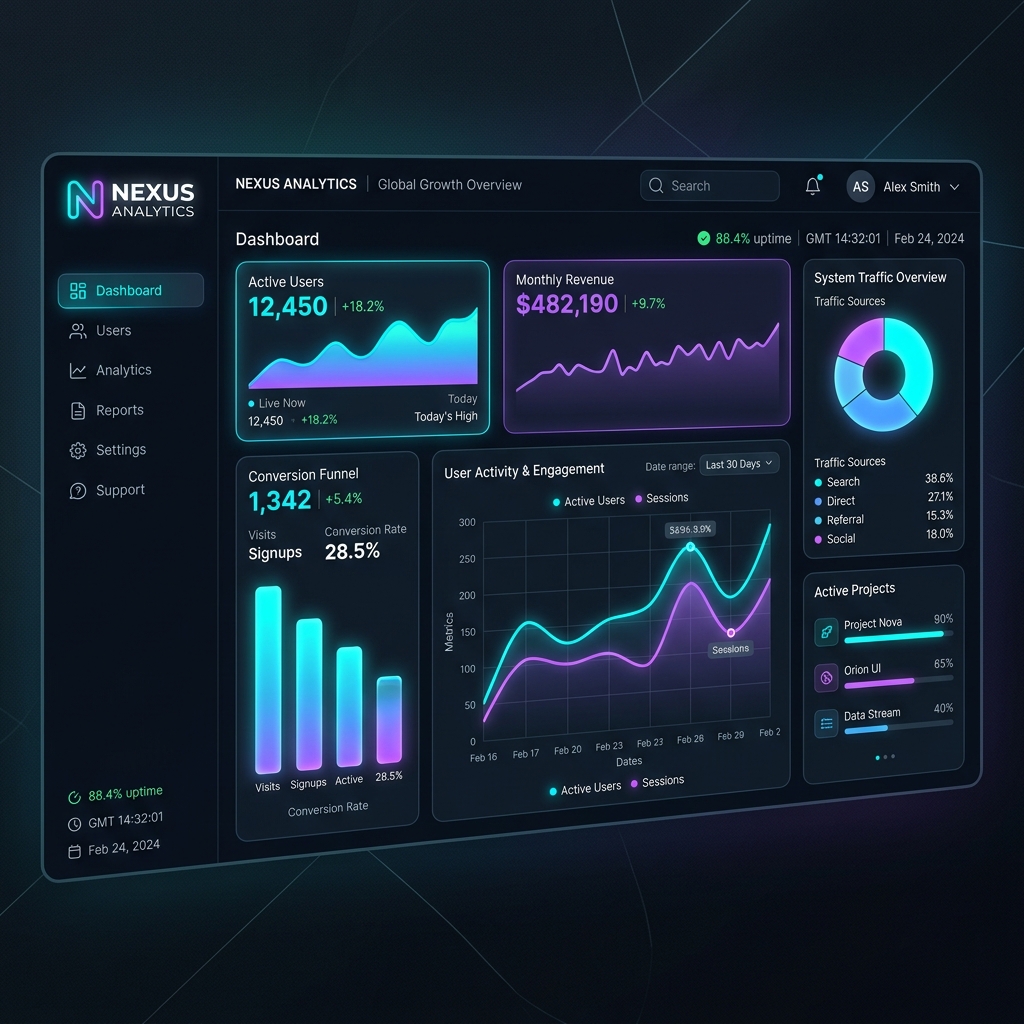
Consider customer support. A traditional business employs a team of 10 representatives answering repetitive queries. An AI-augmented business employs a team of 2 strategic account managers who oversee an intelligent, deeply integrated LLM (Large Language Model) that handles 85% of tier-1 and tier-2 tickets autonomously, 24/7. The cost savings are reallocated into product development and aggressive customer acquisition.

2. The "Personal Superpower" Shift
To bridge the Efficiency Gap, we must first change how we view AI. The fatal flaw most operators make is viewing AI as a simple search engine or a chatbot. To win in 2026, you must view AI as your Chief of Staff, Lead Researcher, and Creative Director.
This is the "Personal Superpower" shift. You are no longer just an entrepreneur or an operator; you are an orchestrator of digital intelligence.
AI as Chief of Staff
Imagine having a brilliant, tireless assistant who reads every email, prioritizes your task list, drafts responses in your exact tone of voice, and schedules your week based on your energy levels. Through tools like advanced Zapier integrations and n8n workflows, AI can monitor your entire digital footprint and manage your operations.

AI as Lead Researcher
Market research that used to require expensive consulting firms can now be executed in hours. By feeding massive datasets—customer reviews, competitor pricing matrices, and macroeconomic trends—into advanced models like Claude 3.5 or GPT-4, you can extract synthesized, actionable insights. The AI doesn't just give you raw data; it gives you strategic recommendations.

3. The Modern Business Tech Stack (The "Core Four")
You cannot build a modern business on legacy tools. The 2026 tech stack is lean, interconnected, and heavily reliant on what we call the "Core Four" pillars of AI deployment.

- 1. The Foundational LLMs (Large Language Models): These are your cognitive engines. OpenAI's ChatGPT, Anthropic's Claude, and Google's Gemini. The secret isn't picking one; it's knowing which model excels at which task. Claude might write better code, while ChatGPT excels at complex logic and data analysis.
- 2. The Automation Wrappers: Tools like Zapier, Make.com, and n8n are the nervous system of your business. They connect your LLMs to your CRM, your email, and your Slack. Without automation wrappers, AI remains siloed. With them, AI acts in the real world.
- 3. The Image and Video Engines: Midjourney, Runway, and Sora. Visual content generation has been completely democratized. You no longer need a massive agency budget to produce high-end, photorealistic brand assets or dynamic video content.
- 4. The Data Connectors: Tools that allow your AI to read your specific company data securely (RAG - Retrieval-Augmented Generation). This is what turns a generic AI into your company's specific AI.

4. Low-Code/No-Code Foundations: Launching in Days
In the past, testing a new business idea required hiring a development team, spending $20,000, and waiting six months for an MVP (Minimum Viable Product). By the time you launched, the market had moved on.
Today, the barrier to entry is effectively zero. Using low-code and no-code platforms supercharged by AI, a single operator can build and deploy functional software, web applications, and complex landing pages in a matter of days.
This enables a philosophy of "Rapid Prototyping." You can launch a feature, run paid traffic to it, analyze the conversion data with AI, and iterate the next day. Speed-to-market is the ultimate competitive advantage, and AI-assisted no-code tools are the vehicle.
5. Masterful Prompting & Tool Stacking
If you take away one concept from this guide, let it be this: Prompt Engineering is dead; Tool Stacking is the future.

Amateurs type simple questions into a chat box and accept the mediocre output. Professionals use the "Persona-Context-Task" framework, but masters use Chain-of-Thought Stacking.
Tool stacking is the art of passing data sequentially through multiple specialized AI agents. For example, instead of asking one AI to "write a blog post," a masterful stack looks like this:
- Agent 1 (The Researcher): Scrapes the top 10 ranking articles for a keyword, analyzes their semantic structure, and identifies content gaps.
- Agent 2 (The Strategist): Takes Agent 1's research and creates a highly optimized, unique outline that answers questions the competitors missed.
- Agent 3 (The Copywriter): Takes Agent 2's outline and writes the draft using your specific brand voice guidelines.
- Agent 4 (The Editor): Reviews the draft for clarity, tone consistency, and SEO optimization.
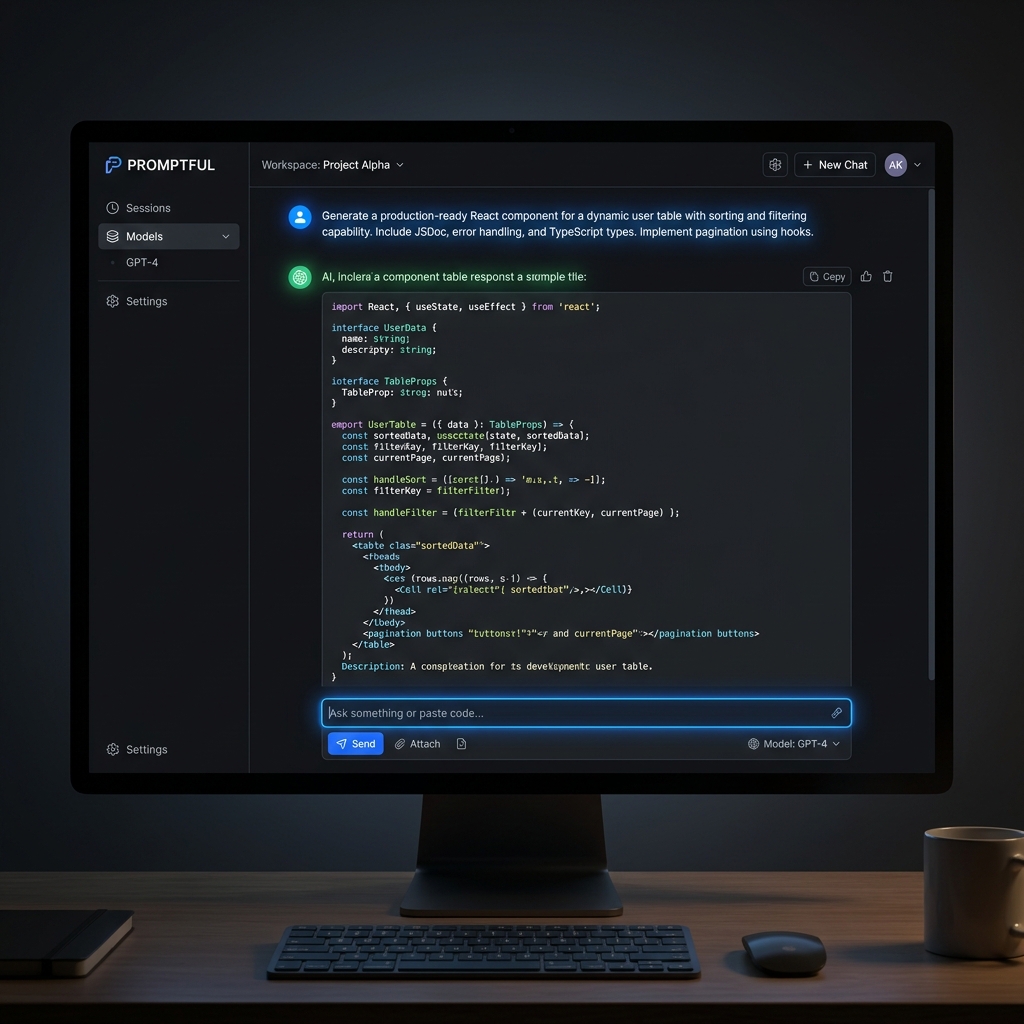
This automated assembly line produces outputs that rival top-tier human agencies at a fraction of the cost and time. Building a library of these "Golden Prompts" and automated stacks is how you create consistent, high-value business assets.
6. Why Most Companies Still Delay AI Adoption
If AI is clearly the future, why are so many teams still stuck? The challenge is rarely awareness. It is execution friction inside real businesses.
Most companies delay implementation for three predictable reasons:
- Fragmented ownership: AI is discussed in leadership meetings but owned by no one with budget, authority, and delivery responsibility.
- Tool-first thinking: Teams buy subscriptions before defining measurable business use cases tied to revenue, margin, or cycle-time reduction.
- Legacy process lock-in: Existing SOPs, approval loops, and risk policies were built for pre-AI operations and now slow down every improvement initiative.

7. The Implementation Roadmap Companies Need
Winning companies treat AI implementation as an operating model shift, not a side experiment. They execute in controlled phases that compound over time.
Phase 1: Audit workflows. Identify repetitive tasks, decision bottlenecks, and data-heavy activities where AI can deliver immediate lift.
Phase 2: Deploy 2-3 high-impact automations. Focus on processes with direct business impact (lead qualification, support triage, reporting, proposal drafting).
Phase 3: Integrate with internal data. Move from generic outputs to context-aware systems by connecting CRM, docs, and operational knowledge.
Phase 4: Institutionalize governance. Define review, compliance, quality-control, and ownership so AI becomes safe, repeatable infrastructure.
Ready to Close Your AI Efficiency Gap?
AI is no longer optional infrastructure. Companies that implement now reduce operating drag, accelerate delivery, and protect margin under competitive pressure.
Start with one workflow, prove ROI fast, then scale across the business.
Request an AI Implementation Audit