From Field to Block
Raised With
Love & Respect
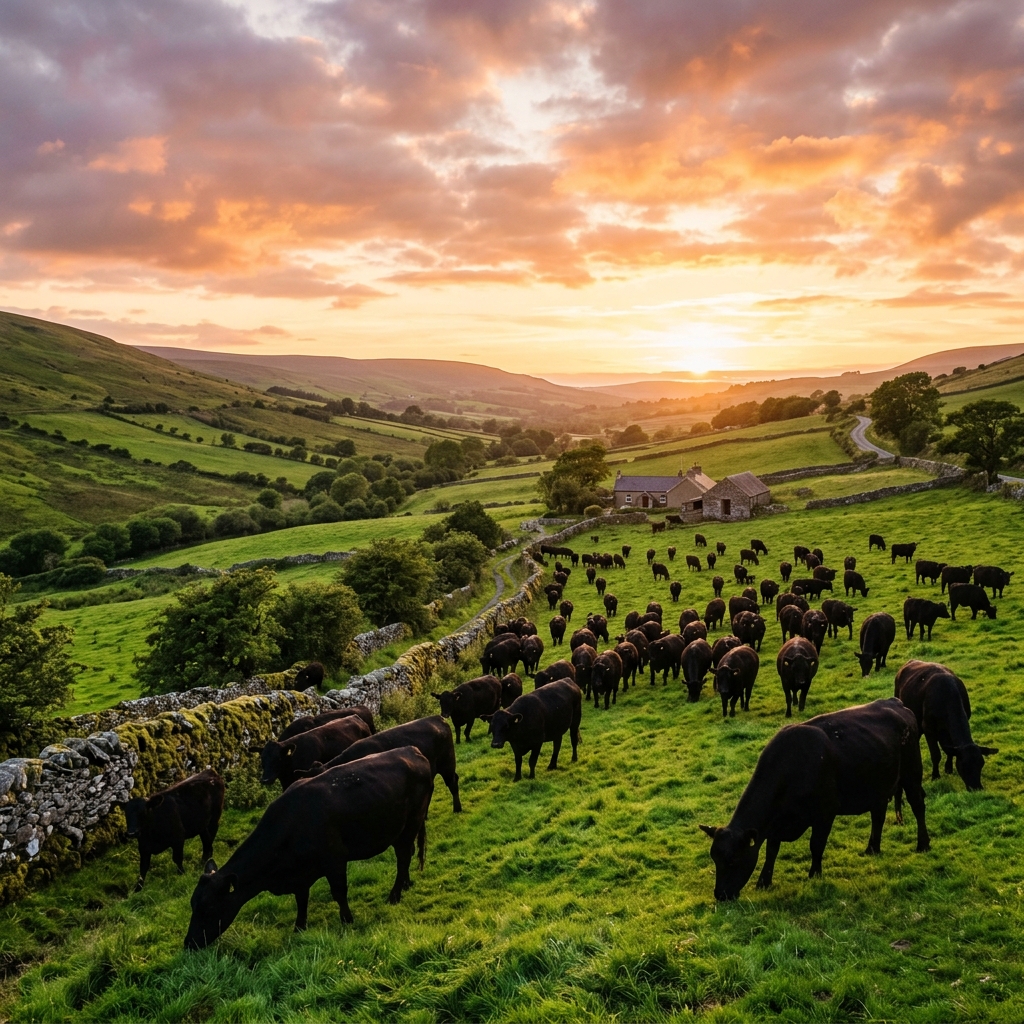
Every animal we sell lived a full, free life on open Irish pasture. This is their story — and why it matters to every cut you bring home.
Read the story
From Field to Block
Every animal we sell lived a full, free life on open Irish pasture. This is their story — and why it matters to every cut you bring home.
We believe that how an animal lives is inseparable from how it tastes. A life lived well — in open fields, on natural grass, free from stress — produces meat of extraordinary depth and character. That is not a marketing claim. It is simply the truth of the land.— Seán Flanagan, Head Butcher & Founder, The Artisan Block
Chapter One
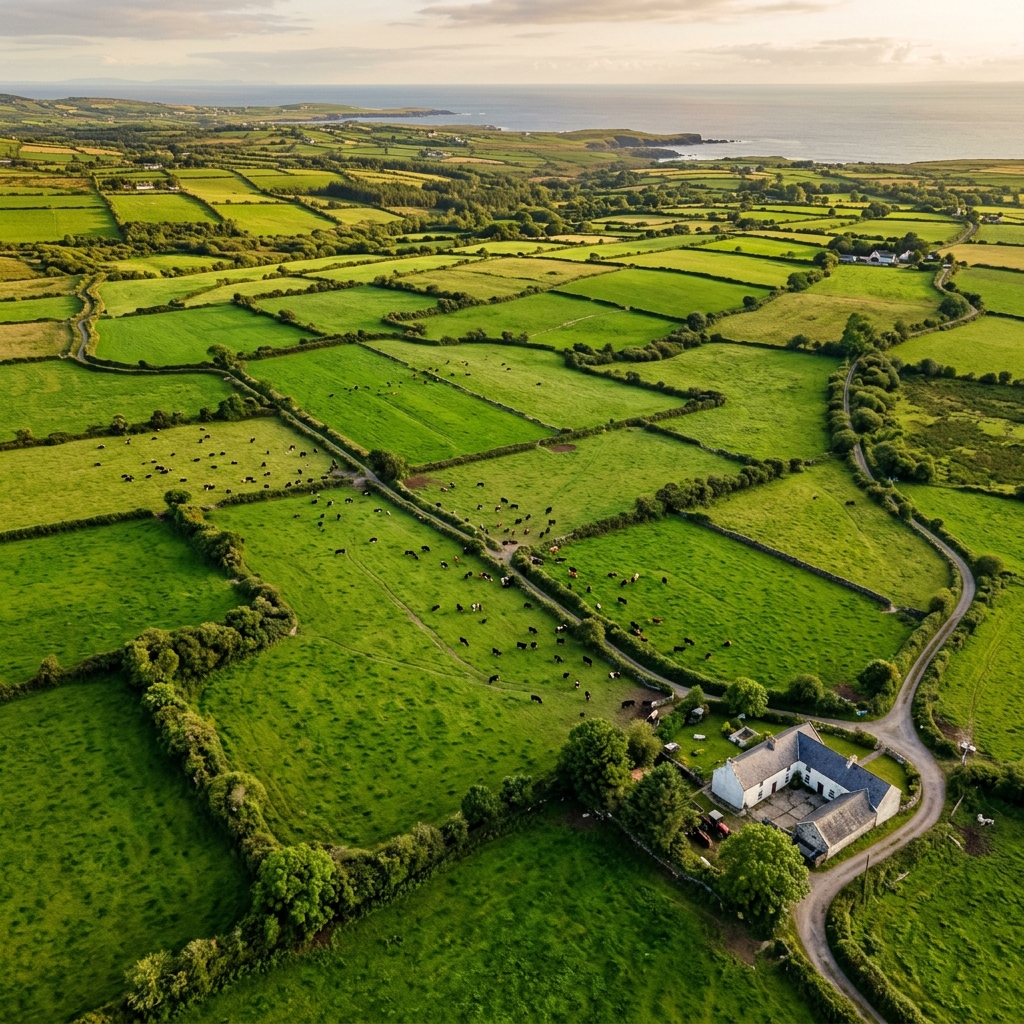
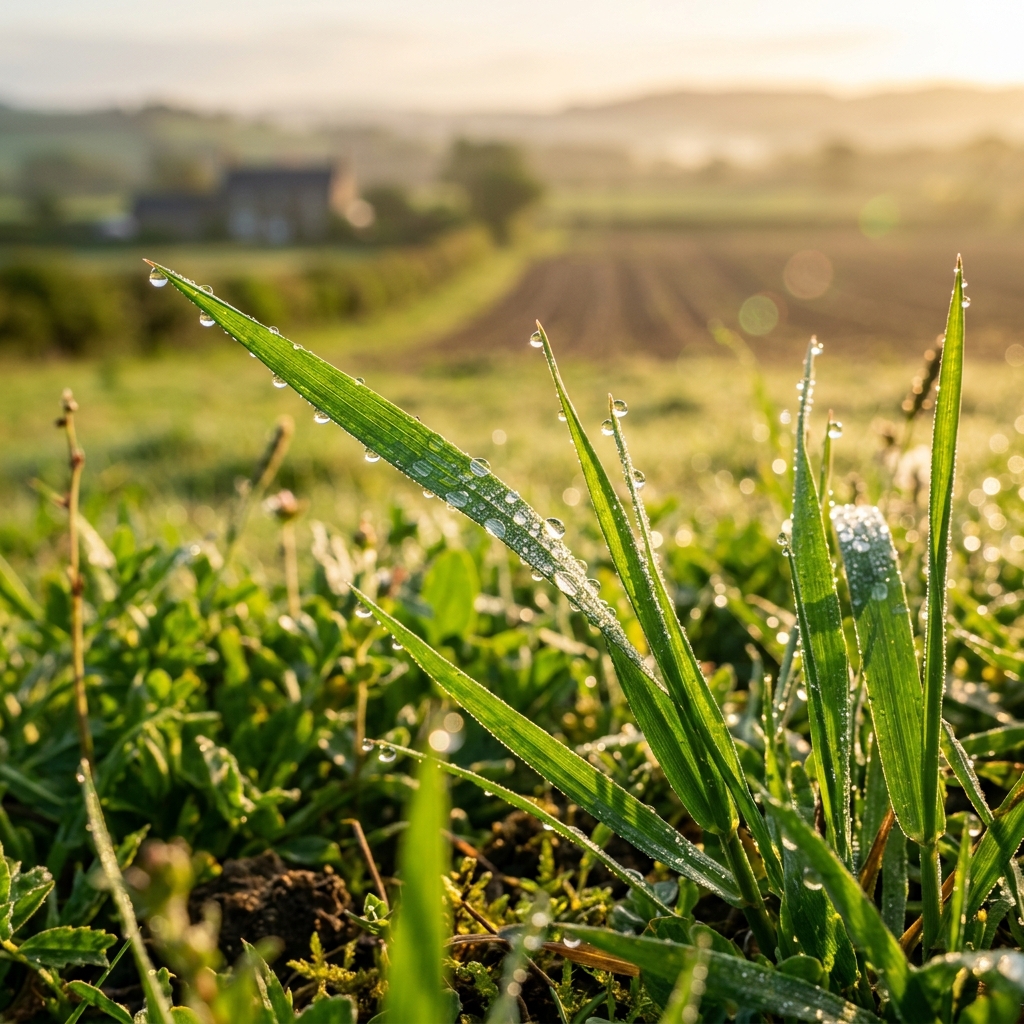
Ireland sits at a rare confluence of Atlantic rainfall and ancient limestone soils — a combination that produces some of the richest, most biodiverse grassland on earth. For over 300 days a year, our cattle graze on this living carpet of perennial rye grass, clover, plantain, and wildflowers.
This is not simply a pastoral tradition. It is the single greatest determinant of flavour in the meat you eat. Grass contains chlorophyll, beta-carotene, and a complex web of volatile aromatic compounds that transfer directly into muscle tissue. That deep, clean, mineral richness you taste in a properly sourced grass-fed steak? That is the Irish landscape, translated into flavour.
We partner exclusively with farms that practise rotational grazing — moving herds between paddocks so the land is never exhausted. The grass regenerates, the soil stays rich, the cattle always have fresh pasture. It is a system that has worked for thousands of years, and we see no reason to fix what nature already perfected.
Chapter Two
Our cattle are born on the same farms they live and grow on. Calves stay with their mothers through natural weaning — a process that takes months, not days. There is no forced separation, no artificial weaning stress. The herd bond is sacred to our farming partners, and to us.
They graze freely across rotating paddocks, sheltering under native hedgerows in summer and returning to deep-bedded barns only during the harshest winter months — when the grass cannot recover fast enough to support them. Even then, they are fed silage cut from the same fields they graze, never grain, never corn, never feed additives.
No growth promoters. No routine antibiotic use. No crowded feedlots. Every animal is individually tagged at birth and its entire life recorded — from the field it was born in, to the farm it lived on, to the specific pasture it grazed the month before processing. That record comes with your meat.
Calves stay with their mothers for a minimum of 6 months
Zero grain supplementation. Grass, clover, and silage from their own fields
Animals never move between farms. Born, raised, and processed locally
Every cut traceable to the individual animal and its birth farm
Chapter Three
We don't buy from faceless suppliers. We buy from families we have known for decades.
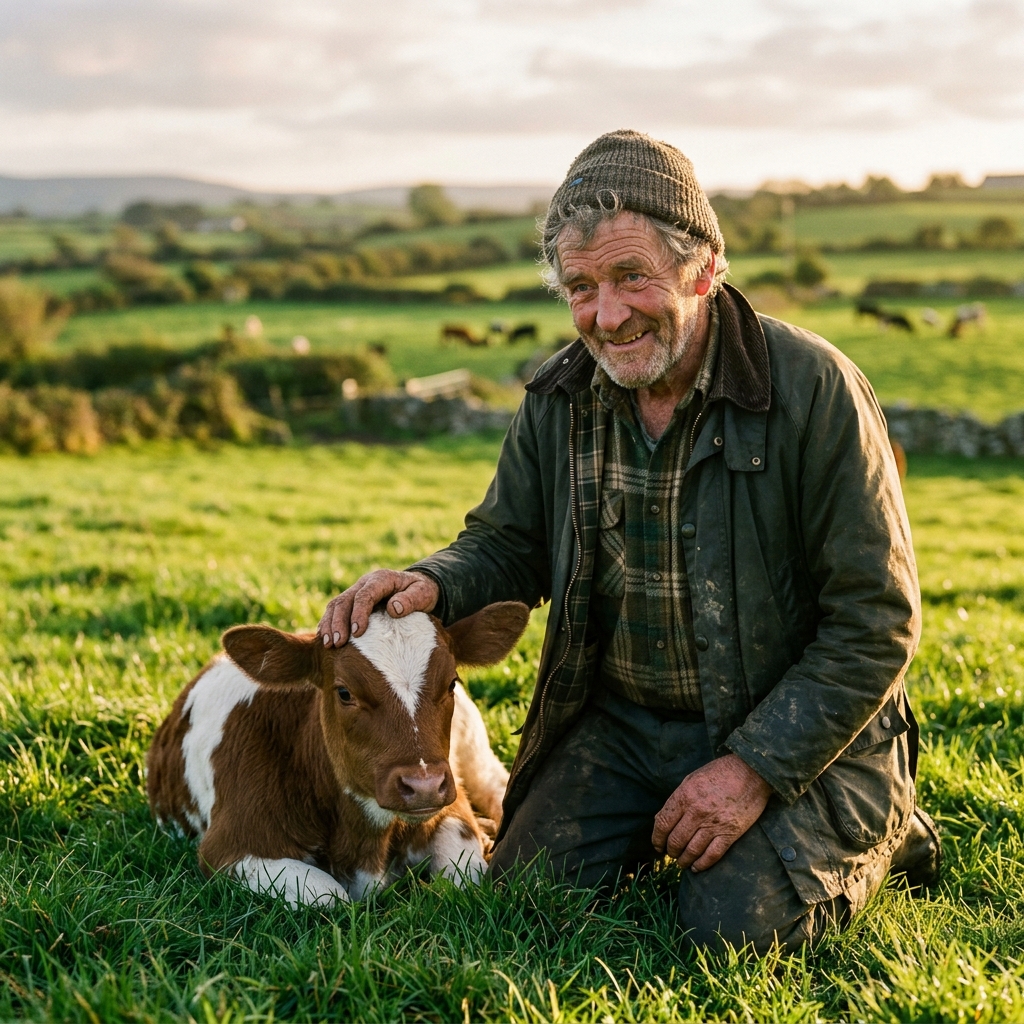
"I know every animal by sight. I know their mothers. I watch them being born in the field and I follow them every day of their lives. That's the only way I know how to farm."
— Padraig Murphy, Murphy's Farm, Co. Galway · Partner since 1994When Seán Flanagan opened The Artisan Block in 1987, he made a decision that shaped everything that followed: he would only work with farmers he could visit, speak to face-to-face, and whose practices he could personally verify. Not certificates. Not audits. Actual visits. Actual conversations. Actual trust built over time.
Padraig Murphy of Co. Galway was one of the first. In 1994, Seán made the drive west, walked the fields, met the herd, shared a cup of tea in the farmhouse kitchen. Within a week they had a handshake agreement that still governs their relationship today — thirty years later, no written contract required.
Each of our twelve farm partners shares the same values: land first, animals second, commerce third. They are not intensive operations chasing yield. They are stewards of the landscape, farming in the same fields their grandparents farmed, using methods refined over generations. We are honoured to carry their work forward to your table.
Chapter Four
From first breath to your table — every stage of our animals' lives is guided by care.
Calves are born in the fields from February to April, during Ireland's spring flush. Mothers calve naturally, with minimal human intervention. Calves stand and feed within hours, bonding with their mother and the wider herd.
Mother and calf graze together across paddocks rotating on a 21-day cycle. The calf feeds freely from its mother while learning to graze alongside her. No separation. No stress. The herd remains calm and tight-knit.
After 6–8 months, weaning begins naturally as the cow's milk production reduces and the calf increasingly relies on pasture. Our farmers use fence-line weaning — calves stay visible to mothers for weeks, reducing stress dramatically compared to abrupt separation.
Only when the ground is too wet or cold to sustain grazing do our animals come indoors. They are housed in spacious, deep-bedded barns with plenty of room to lie, move, and socialise. Fed exclusively on silage harvested from their own pastures. Straw bedding changed regularly. Constant access to water.
When the grass returns, so do the cattle — typically by early April. The paddock rotation resumes, giving each strip of land three weeks to recover before being grazed again. Animals spend their days moving slowly across the land, grazing, resting beneath hedgerows, drinking from natural streams.
Unlike grain-finished beef, which is rushed to market in 14–16 months, our grass-fed cattle are given the full time they need — typically 24 to 30 months — to develop slowly on pasture. This patience is the source of the deep, complex, mineral-rich flavour that sets our beef apart.
We work exclusively with a single local abattoir 40 km from all our partner farms. Animals travel the minimum possible distance and are processed the same day they arrive. Low-stress handling throughout. The entire process is RSPCA-standard monitored. We are present. We witness. We ensure it is done with dignity.
Chapter Five
The benefits of a grass-fed life are not abstract. They are measurable, tasteable, and real.
Grass-fed beef contains significantly higher concentrations of anti-inflammatory omega-3s compared to grain-fed. The ratio of omega-6 to omega-3 in grass-fed is close to 2:1 — compared to 15:1 in grain-fed beef.
CLA is a naturally occurring fatty acid found almost exclusively in ruminants raised on grass. Research links it to reduced body fat, improved immune function, and anti-carcinogenic properties. Grain eliminates it. Grass preserves it.
Natural vitamin E from fresh grass is deposited in muscle tissue, acting as a natural antioxidant that extends shelf life and preserves the brilliant red colour that signals fresh, healthy beef. It also contributes to a cleaner, sweeter finish on the palate.
The aromatic volatile compounds unique to grass — terpenes, aldehydes, ketones — transfer into fat and muscle tissue as the animal grazes. This is why our beef has that distinctive depth: green, mineral, clean, complex. Not sweet, not bland. Alive.
Rotational grazing on permanent grassland actively sequesters carbon in the soil. Our partner farms have measurably improved their soil organic matter over the past decade. Buying grass-fed from local farms is one of the most meaningful food choices you can make.
Every euro spent with us flows directly to family farms in rural Ireland. No middlemen. No multinationals. Our pricing reflects the true cost of ethical, slow food — and every cent of that premium goes to the farmers who deserve it.
Our Commitment
As long as The Artisan Block exists, we will only ever sell meat from animals raised the way we describe on this page. If we cannot source it this way, we will not sell it. That is not a business model. It is a promise — to you, to our farmers, and to the animals that make this all possible.
Order Grass-Fed Beef